
You have not yet added any article to your bookmarks!
Join 10k+ people to get notified about new posts, news and tips.
Do not worry we don't spam!
Post by : Saif Rahman
The escalating tensions between China and Japan have once again highlighted the precarious nature of peace in East Asia. Recent remarks from China’s Foreign Minister, Wang Yi, along with Japan’s strong rebuttals, illustrate how swiftly rhetoric and military engagements can elevate the risk of conflict in delicate areas.
The friction began when Japan accused Chinese military aircraft of targeting Japanese reconnaissance planes, labeling the maneuver as perilous. China's response maintained that Japanese planes were infringing upon its naval exercises, thereby disrupting crucial military operations.
While these exchanges might resemble typical political disputes, they carry significant dangers. Proximity between military assets from powerful nations can lead to catastrophic miscalculations.
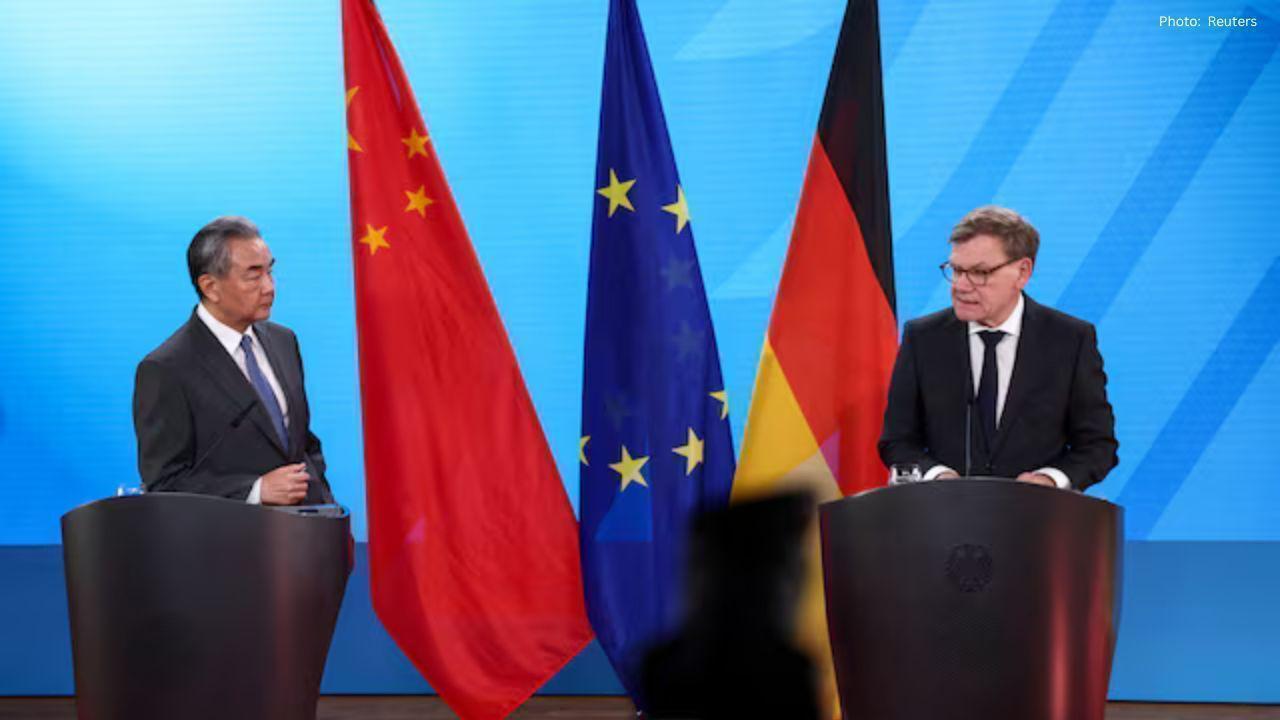
China's foreign minister conveyed to his German counterpart that Japan was “militarily threatening China.” He voiced strong dissent regarding Japan's stance on Taiwan, reminding all of Japan’s wartime conduct as the 80th anniversary of the war's conclusion approaches. He emphasized the need for Japan to exercise greater caution and accountability in today's geopolitical climate.
China asserts that Taiwan is a territory of its own, a claim that has been reiterated on numerous occasions. Nevertheless, Taiwan operates with its own government, conducts elections, and maintains a military, firmly rejecting Beijing's assertions. Taiwanese leadership insists that the determination of their future lies solely in the hands of its inhabitants.
This clash extends beyond historical grievances. It encapsulates issues of dominance, influence, and apprehensions about the future. Japan’s growing unease over China’s military capability has prompted the Prime Minister to indicate that Japan may respond if actions against Taiwan threaten its own national security, further inciting Chinese animosity.
Editorially speaking, the current developments are cause for alarm. Asia is home to some of the richest economies and busiest maritime routes globally. Stability in this area is crucial not just for China and Japan, but for the entire international community. A conflict in this region would disrupt trade, travel, and security on a global scale.
Furthermore, it is crucial to recognize that military might should not serve to convey political messages. Actions like radar targeting or maneuvers near warships are fraught with peril, heightening animosities and complicating peaceful negotiations.
Diplomatic approaches must remain a priority. Nations should emphasize dialogue, mutual respect, and patience, rather than threats or military intimidation. History indicates that wars frequently commence from seemingly minor grievances that are overlooked or trivialized.
Germany’s role as a diplomatic observer further exemplifies the global scrutiny being placed on this situation. Major world powers are aware that actions in East Asia could have far-reaching consequences. Therefore, calm and diplomatic engagements are essential.
Ultimately, every nation suffers in times of war. Regardless of advancements in technology, the human and economic toll remains tragic and severe. Leaders must approach escalating tensions with caution and foresight.
The interplay between China and Japan serves as an urgent reminder. Assertive rhetoric and precarious military postures could easily spiral into ominous outcomes. The world requires wisdom and a commitment to peace—rather than displays of power or pride.
In conclusion, only through sincere dialogue and adherence to international norms can the future of this region be safeguarded. Peace should not be misconstrued as a weakness; rather, it is the most robust strategy forward.







Josh Kerr and Jakob Ingebrigtsen Set for 1,500m Rivalry Rematch
Josh Kerr and Jakob Ingebrigtsen will renew their 1,500m rivalry at the Ultimate Championship in Bud

PSG Coach Luis Enrique Urges Players to Step Outside Comfort Zone
PSG coach Luis Enrique says players must leave their comfort zone and keep improving as the club tar

China’s Tiangong Sets New 400m Record at Robot Olympics
China’s Tiangong robot sets a new 400m record at the Robot Olympics, beating a South African robot i

George Russell Wins Dutch GP Sprint, Boosts Mercedes Morale
George Russell wins the Dutch GP Sprint from pole as Mercedes teammate Kimi Antonelli extends his F1

Australia 50/3 After Bangladesh Bowled Out for 64 in Second Test
Australia reached 50/3 after Bangladesh were bowled out for 64 in the second Test, with Mitchell Sta

Jordan Burroughs Returns to Wrestling with 2028 Olympic Dream
Jordan Burroughs returns to wrestling with Real American Freestyle as the Olympic champion eyes a po

